Updated July 2026
Automatic Cup Washer: How It Actually Works
"Automatic cup washer" is one of the most searched names for this product, but it's a bit of a
misnomer. Here's what's actually inside one, and which model to buy.
Quick Answer
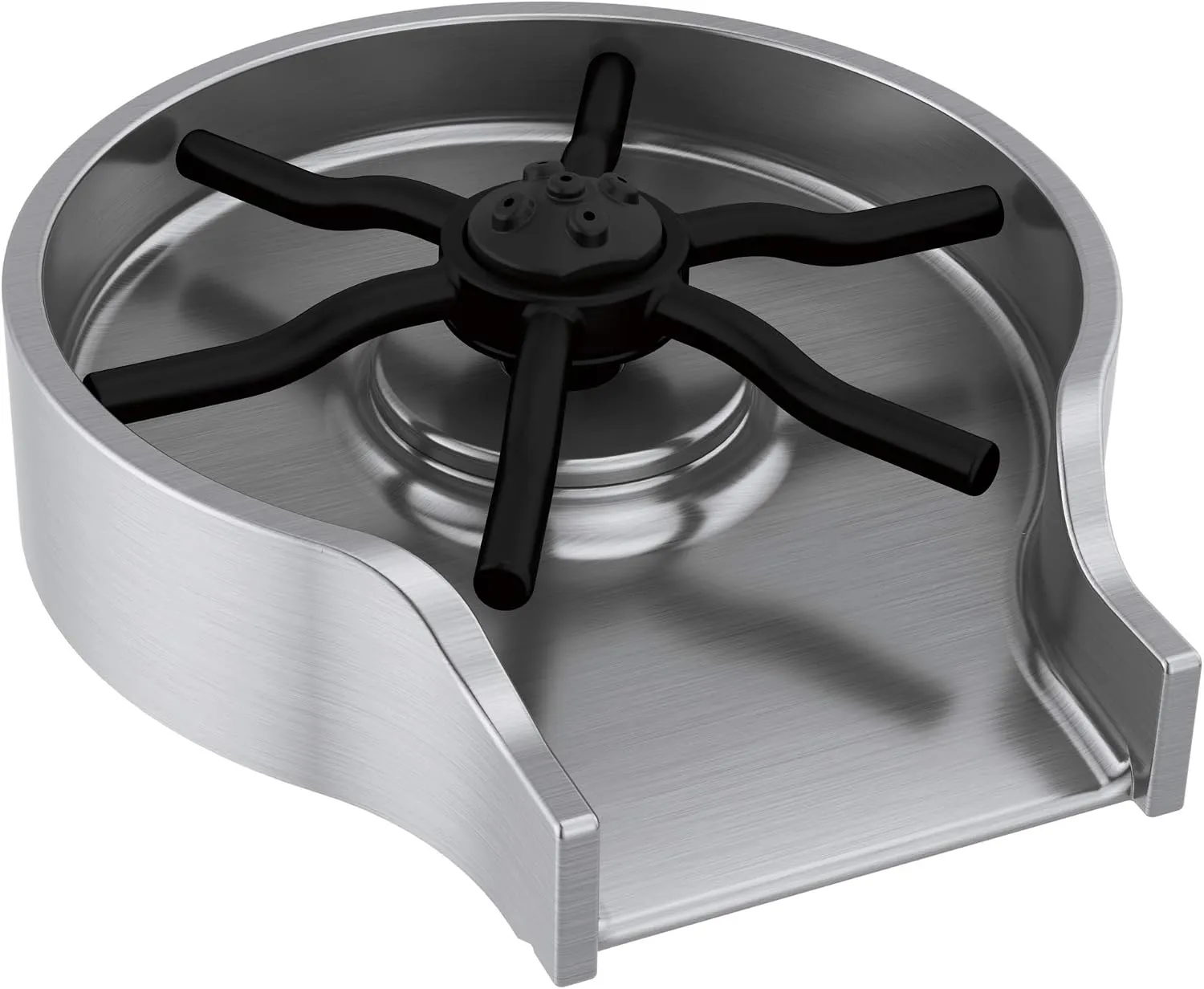
An "automatic cup washer" is not electric or motorized. It's a water-pressure-activated glass rinser. Press a cup
upside down onto the nozzle and it rinses automatically; let go and the water stops automatically. No batteries,
no power cord, no app. The
Delta GR250-AR is our pick for the strongest
"automatic" rinse action of the three products we compared.
"Automatic" Means Press-Activated, Not Powered
Every cup washer we've seen on the market, including all three products we recommend on this site, works the
same simple way: a spring-loaded or pressure-sensitive valve sits inside the nozzle. When you press a cup, glass,
or bottle down onto it, the valve opens and water sprays upward and outward to rinse the inside of the vessel.
Lift the cup off, and the valve closes, shutting the water off automatically. That's the "automatic" part:
it starts and stops on its own, with zero interaction beyond pressing a cup onto it.
There's no motor, no electricity, and nothing to charge or plug in. That's actually a feature, not a limitation:
it means there's nothing to break electronically, no batteries to replace, and no risk of it running while you're
not home.
Plumbed vs. Countertop "Automatic" Rinsers
There are two setups sold under the "automatic cup washer" name:
- Plumbed sink models (like the Delta GR250-AR) connect directly to your hot or cold water
supply line through a hole in your countertop or sink deck, the same way a soap dispenser does. These generally
deliver the strongest, most consistent rinse pressure.
- Countertop / self-contained models (like the YBB Pitcher Rinser) hold their own small water
reservoir or connect to a simple hose, and sit next to the sink with no drilling required. These trade some
water pressure for a much easier setup.
Our Pick for the Best "Automatic" Rinse
Best Overall
Delta Brushed Nickel Glass Rinser, GR250-AR
★★★★½ 4.6 (947 reviews)
$299
Prime Eligible
The Delta GR250-AR is the glass rinser we'd install in our own kitchen. It uses powerful water jets to blast residue out of cups, baby bottles, and travel mugs in seconds, and Delta backs it with a Lifetime Limited Warranty, which is rare for a sink accessory at this price.
FAQ
What is a cup washer?
A cup washer (also called a glass rinser, bottle rinser, or pitcher rinser) is a small sink-mounted or countertop device that blasts drinkware with high-pressure water jets when you press it upside down against the nozzle. It's designed to rinse residue out of cups, glasses, baby bottles, and shaker bottles in seconds, without soaking or hand-scrubbing.
Why use a glass rinser?
A glass rinser saves time and water compared to rolling a cup around under a running faucet, keeps residue from hardening onto glassware between washes, and is genuinely useful for smoothie cups, protein shakers, baby bottles, and coffee mugs that get used multiple times a day.
Do glass rinsers use hot or cold water?
It depends on the model. Plumbed sink units like the Delta GR250-AR connect to either your hot or cold supply line (your choice at install). Self-contained countertop units like the YBB rinser are cold-water only, since they don't tie into your home's water lines.
Do glass rinsers make a mess?
They can if a cup isn't pressed firmly and squarely onto the nozzle, or if the unit is installed too far from the sink basin, water can splash outward instead of draining down. Models with tall side walls and a tilted base (like our budget pick) are built specifically to reduce splashing.
Do I need a glass rinser?
It's not a necessity, but it's a strong convenience upgrade if you regularly rinse the same handful of cups, bottles, or glasses throughout the day. If that describes your kitchen or bar, the time saved adds up quickly.